
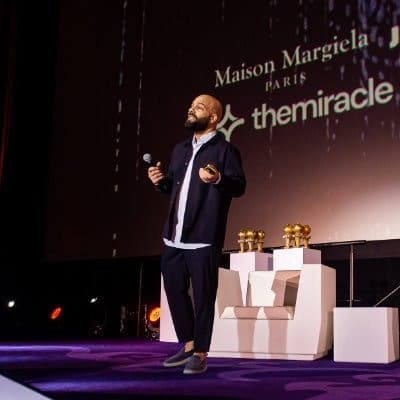
The story of Mr. Mo
Learning to Live Between Identities
Mr. Mo was born in Germany to Palestinian refugee parents. He credits his father's decision to leave Palestine, study engineering, and build a safer future with making his own path possible. Childhood often placed him between categories.
His parents gave him both German and Arabic names to support integration, yet he still felt that some Arab children did not view him as fully Arab while some German children did not view him as fully German. Rather than erase that tension, he learned to turn it into range. His father repeated practical rules: do well in school, save money, and do not lie. Those values, combined with exposure to sport, music, and different communities, became the base of his later ability to move between industries and connect people who might otherwise remain separated.
Earning Authority Without the Expected Credential
Mr. Mo chose not to attend university because he wanted to begin earning and learning directly. He trained in business administration, worked in automotive and telecommunications, and reached management roles despite not holding the degree often expected for them. The path demanded consistent preparation, respect for colleagues, and the willingness to understand a product and process in detail. He later moved into fashion and worked with major brands, where relationship skills mattered as much as formal title.
The pressure was substantial. He described years of very long days after entering Web3 and acknowledged the strain that pace placed on ordinary routines. His career also reinforced a central rule: reputation compounds. Calling out dishonesty, helping people without immediately demanding a return, and doing work properly created opportunities that no social media metric could guarantee.
Trust as the Agency's Distribution System
Mr. Mo's Web3 agency grew from the same relationship practices that carried him through earlier industries. He said word of mouth was his primary source of business, with LinkedIn playing a larger professional role than attention-driven social platforms. His work includes consulting, brand relationships, ambassador roles, and connecting projects with people who can move them forward.
He also spoke about supporting teams before a formal role existed, then earning responsibility when that contribution proved useful. The model is simple but demanding: know the product, care about the people, and remain useful long enough for trust to form. His current work as a speaker and connector extends that approach into Web3 communities. Rather than treating networking as follower collection, he treats it as an exchange of credibility where introductions, recommendations, and promises carry real consequences.