
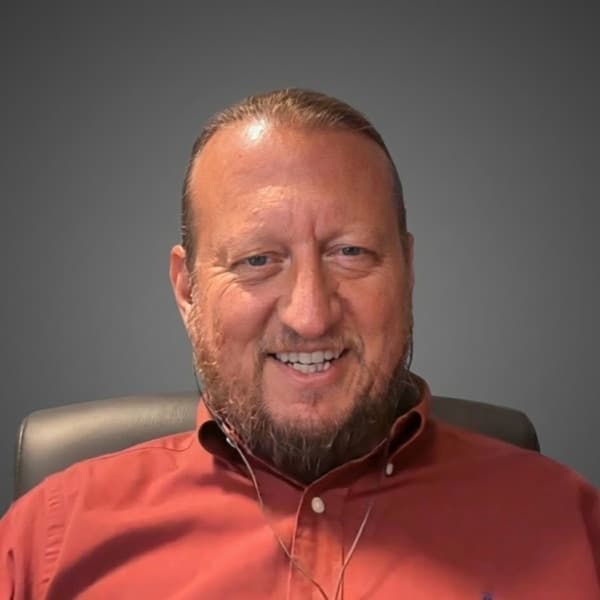
The story of Andrea De'Marsi
History, engineering, and a habit of taking things apart
Andrea De'Marsi grew up in Ravenna, a historic city on Italy's Adriatic coast. He was a curious child who took toys apart to understand their mechanisms, played volleyball, and became interested in computers and communications. He studied telecommunications engineering in a five year Italian university program and completed his thesis at the Villa Griffone radio laboratories, the site associated with Guglielmo Marconi's early radio experiments.
The education was theoretically rigorous, while later work taught Andrea to value the faster and more pragmatic approach he saw in American business culture. His first employer was a Swiss radio propagation startup. The role exposed him to the speed, uncertainty, broad responsibilities, and close working relationships of startup life, an environment he found more engaging than a narrow role inside a large corporation.
Market shocks, remote teams, and hard scrutiny
Andrea's first startup was hit by the broader technology downturn around the dot com collapse despite a capable team and solid product. The experience taught him to separate personal failure from external forces without ignoring the responsibility to assess what was controllable. At Spreaker, he and his co-founders spent more than a decade adapting the company.
It began as a live radio creation tool, shifted toward podcast hosting, and then built programmatic advertising products so podcasters could monetize their work. The team adopted fully remote hiring around 2015 after struggling to recruit strong developers locally, widening its talent pool while relying on trust and intentional routines. Andrea also learned to investigate apparently exceptional partnerships carefully, because pressure to decide quickly can hide weak assumptions and consume the one resource a startup cannot recover: time.
Making podcast discovery less of a black box
After Spreaker was acquired, Andrea spent four years helping transfer management to the new owner. He and a former co-founder then chose to build again rather than remain in a large corporation. PodSEO emerged from a gap they had observed across podcasting: creators had hosting and monetization tools but little structured help with search visibility.
The platform helps podcasters identify relevant keywords, estimate difficulty and value, improve titles and descriptions, and test changes across older episodes as well as new releases. Andrea sees back catalogs as especially useful because established listeners have already consumed them, making optimization a way to reach new audiences. The team's current focus is automating the workflow so independent creators and studios can form, apply, and monitor an SEO strategy without first becoming search marketing specialists.