
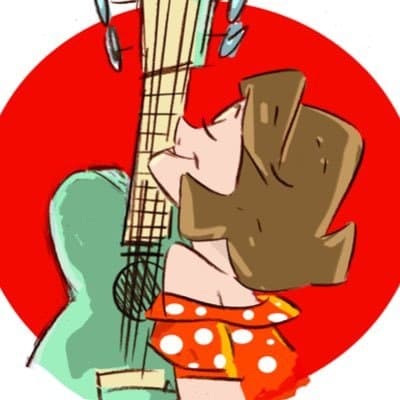
The story of Violetta Zironi
From an Italian town to songwriting
Violetta grew up in an Italian town where music and illustration were part of family life. Her father illustrated Disney comics and played blues music, and he noticed her voice while jamming with Violetta and her sister. She studied classical music through childhood, then discovered punk rock and Green Day, which expanded her sense of what a musician could sound like.
Piano, choir, guitar, and songwriting gave her several creative languages rather than one approved style. That range also helped her develop an artistic identity strong enough to withstand pressure from teachers, family expectations, and later music-industry professionals who wanted to define her path.
The cost of staying independent
Violetta's professional journey included several managers, contracts that offered limited control, and repeated efforts to fund her own music. She learned that an independent artist cannot only make songs. The role also requires networking, finance, marketing, and direct communication with supporters.
Trust became difficult when intermediaries promised opportunity but controlled the economics or creative choices. Rather than allowing those failures to end the career, Violetta built more of the business herself. The process was demanding, but it clarified the principle she wanted to protect: the ability to continue making her own music without surrendering most of the value or direction to another company.
Music NFTs and a direct audience
After discovering NFTs, Violetta committed time to understanding the ecosystem and launched an early music collection within weeks. She built a collector community through thousands of hours of Twitter Spaces, interactive council meetings, one-of-one sales, and partnerships including OpenSea. The model lets supporters participate more closely in her artistic journey while helping finance independent releases.
Violetta has continued building multiple collections, creating a durable on-chain catalog that includes thousands of music NFTs. Her work does not treat technology as a replacement for songs. It uses digital ownership and direct relationships to preserve creative freedom and give listeners a more active connection to the artist.